THANK YOU FOR SUBSCRIBING
× 
Startup City Weekly Brief
Be first to read the latest tech news, Industry Leader's Insights, and CIO interviews of medium and large enterprises exclusively from Startup City
Startup City


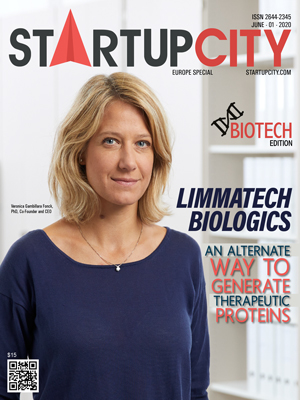
LimmaTech Biologics
An Alternate Way to Generate Therapeutic Proteins
 Veronica Gambillara Fonck, PhD, Co-Founder and CEO
Following the footprints of someone else to reach a destination that is predetermined by another’s vision can often be deemed as a safe game-plan. But creating a path for others to follow is even greater. Yet, the road to becoming a successful entrepreneur isn’t an easy one; it is long, tedious, filled with setbacks, and requires a great deal of perseverance to overcome those obstacles effectively. It takes a person that is uncompromisingly willful to turn those stumbling blocks into success. Veronica Gambillara Fonck, PhD, co-founder, and CEO of a Swiss biopharmaceutical company, LimmaTech Biologics, is one such brave leader whose unfaltering drive towards developing next-generation pharmaceuticals helped her create a name for herself in the biopharma industry.
“CustomGlycan Platform is able to customize the glycan profile of therapeutic glycoproteins, including monoclonal antibodies, enabling new modes of action and maximizing their efficacy”
With an engineering degree and a PhD in life sciences in the field of cardiovascular biomedical engineering, Veronica started her career in the MedTech field, focusing specifically on cardiovascular health and the obesity field serving roles that focused on clinical R&D and international regulatory affairs. After acquiring sufficient experience, she moved on to vaccine research and the biotechnology field. In 2009, she joined the vaccine biopharmaceutical company, GlycoVaxyn. During her six-year tenure in the firm, Veronica held different positions, from leading the clinical and regulatory department to taking care of the business development of the company. She was also one of the core members responsible for building GlycoVaxyn’s success in the development of prophylactic and therapeutic vaccines for a range of bacterial diseases with its innovative biological conjugation platform. In 2015, GlycoVaxyn was acquired by GlaxoSmithKline (GSK), and, as part of the acquisition, the platform, was transferred to GSK’s ownership. However, the scientists and the team that led GlycoVaxyn stayed back and created LimmaTech Biologics. The goal was to build an independent entity which would collaboratate with GSK in developing vaccines in an agile and flexible environment and to allow the company to discover new technologies.
It was this moment of change that caused Veronica and her team to discover there were no productive and suitable ways to develop and produce complex glycoproteins. This drove her and the rest of the scientists to combine their expertise to bring forward a unique approach to manufacture next-generation pharmaceuticals using a protein glycosylation platform, today named CustomGlycan Platform. “Developing therapeutic proteins with customized glycan profiles is extremely complex, and when we realised that, we decided to build LimmaTech’s focus around addressing the problem,” says Veronica.
Enabling novel functions of therapeutics with glycoengineering
Proteins’ potential as potent therapeutic agents has led to the introduction of therapeutic proteins or biologics, which has massively transformed the drug discovery and development paradigm. Over 70% of therapeutic proteins, including monoclonal antibodies, are glycoproteins.
The attachment of glycans to proteins takes place through a process called glycosylation— sugar units (glycans) are enzymatically, in vivo, attached to the proteins. Glycans modulate the critical properties of proteins such as interaction to receptors, stability, folding, immunogenicity, and pharmaco kinetics.
Therapeutic glycoproteins, especially monoclonal antibodies, have gained considerable clinical success, resulting in several FDA-approved therapies to improve patient care. Monoclonal antbodies’ ability to target antigens proves to be one of the most effective paths for the treatment of cancer, organ disorders, and autoimmune diseases. Despite these benefits, there are several challenges, such as potential immunogenicity, low efficacy, and off–targeting.
Given its ease of fermentation and short generation time, the CustomGlycan Platform rapidly accelerates cell line development and subsequent production steps, thereby reducing the overall protein production costs
Therapeutic glycoproteins, especially monoclonal antibodies, have gained considerable clinical success, resulting in several FDA-approved therapies to improve patient care. Monoclonal antbodies’ ability to target antigens proves to be one of the most effective paths for the treatment of cancer, organ disorders, and autoimmune diseases. Despite these benefits, there are several challenges, such as potential immunogenicity, low efficacy, and off–targeting.
However, efficient and controlled glycosylation remains a crucial challenge in biologics manufacturing. Rising to this, GlycoEra, a business unit of LimmaTech, has developed a game changing, innovative glycoengineering technology, which enables the development and production of novel therapeutics with a customized and defined glycosylation profile. “Using this approach, we pioneered the exploitation of the full potential for novel drug discovery, tissue and organ targeting, and effector function modulation for the first time in human therapy,” says Veronica.
Revolutionising Pharmaceutical Treatment Options
Currently pharma manufacturers use mammalian cell lines such as Chinese hamster ovary (CHO) and human embryonic kidney (HEK) cells for production of therapeutic glycoproteins. The resulting glycoproteins often display undesirable characteristics that impact its therapeutic efficacy. “This is because mammalian cell lines typically contain complex glycosylation pathways, which, when genetically modified, lead to inefficient production or cell death,” informs Veronica. To that end, LimmaTech has identified new cell lines comprising unique, short, human- like N-glycosylation pathways, which are ideally suited for genetic and glycoengineering to deliver precise, diverse human glycosylation patterns that enable novel functions and maximise the functionality of a protein. The CustomGlycan Platform uses this cell line to develop novel products that so far were not able to be produced such as glycoengineered monoclonal antibodies that enable precise tissue and receptor targeting with maximized functionality.
Moreover, finding its applicability in all protein formats, this platform holds the potential to be a game-changer in manufacturing biologics. The platform will improve the robustness, speed, and cost-efficiency of the entire protein production process. And, given its ease of fermentation and short generation time, the CustomGlycan Platform rapidly accelerates cell line development and subsequent production steps, thereby reducing the overall production costs. To demonstrate the versatility of the platform, LimmaTech has performed several proof of concept studies with hormones and monoclonal antibodies and confirmed the broad applicability as well as the glycoengineering potential. “In short, our platform’s ability to offer customised and uniform glycosylation combined with the cost-effective production is enabling expansion into novel therapeutic areas that were previously inaccessible due to required specific complex glycan structures and high costs of manufacturing,” states Veronica.
Dedicated to Continuous Innovation
While several factors have played a significant role in LimmaTech’s success, the team’s diverse background and combined experience in leading various biotech projects enable them to soar ahead of competitors. A majority of team members hold a PhD or Masters degree in a science-related field and is well-versed in bioengineering techniques. They know how to accelerate the transition of research activity from bench to clinical proof of concept, taking calculated risks. “Our team of smart and dedicated scientists is driven by passion and dedication. Each of them works towards bringing the most innovative ways of bioengineering complex structures to create new drugs and novel paths to prove value in clinical trials,” mentions Veronica.
Besides, LimmaTech is highly focused on research and development. While the firm has an in-house R&D team that is committed to developing innovative ideas and revenue-generating products, Veronica informs that they also use the help of external CRO and CMO to produce the clinical batch for entry into clinical study. In order to remain an agile entity with R&D focus, the company subcontracts the processes that require adherence to quality requirements and regulations keeping the overview and leadership of the process.
Carving Out a New Niche
On one side, LimmaTech continues to develop novel therapeutic pharmaceuticals, and, on the other, the firm collaborates with GSK for vaccine R&D. To that end, the firm is currently conducting a clinical trial in Kenya for a vaccine against Shigella infections (shigellosis) in collaboration with GSK and the UK-based research charity, Wellcome Trust. “We have an exclusive research and development agreement with GSK to produce the Shigella candidate vaccine,” explains Veronica. “This is a fantastic opportunity for our research organisation to contribute to the development of an exciting new generation of vaccines. Whilst we aim to retain the agility and innovativeness of a small biotech company via LimmaTech, we benefit tremendously from the support, expertise, and sheer development power that GSK brings.”
Charting a Safer Future
As a part of its continued mission to develop the next-generation pharmaceuticals, LimmaTech is working on bringing its first lead candidate, a glyco-optimised anti-TNF alpha monoclonal antibody into clinical proof of concept. TNF-alpha, a pro-inflammatory cytokine, exhibits an immuno-regulatory role that can alter the balance of T-regulatory cells and orchestrate an acute immunological response. Despite the huge success of this molecule, generating revenue of more than 25 billion per year, a remarkable medical need is still present. In fact, the licensed antiTNF alpha is ineffective in more than 60% of treated subjects. Thanks to the improved glycan profile, the LimmaTech anti-TNF candidate would be able to increase potency of irradiation of inflammatory cell, stimulating wound healing macrophages, and decrease the development of anti-drug antibodies (ADA) produced by this immunogenic protein. Both modes of action are expected to significantly increase the patient benefit, especially in inflammatory bowel disease (IBD), where only around 40% of patients are in remission after one year of treatment.
In light of this, LimmaTech has created the GlycoEra business unit, which is focusing on bringing the CustomGlycan Platform and its product candidates to the next stage. Veronica and the team are seeking partners and investors for co-funding clinical development of its lead therapeutic product and extend the platform to address other diseases. With its commitment to enhancing treatment options for the most urgent medical needs, LimmaTech is aiming to revolutionise the drug development landscape with its innovative solutions and services.