
THANK YOU FOR SUBSCRIBING
× 
Startup City Weekly Brief
Be first to read the latest tech news, Industry Leader's Insights, and CIO interviews of medium and large enterprises exclusively from Startup City
Startup City: Specials Magazine
NGP capital
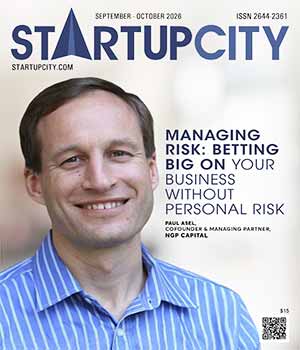
Managing Risk: Betting Big On Your Business Without Personal Risk
Paul Asel founded and led for two decades NGP Capital, a global venture firm with $1.7 billion AUM. Paul has a successful 25+ year track record as an early investor and Board Director in 31 startups, including eight unicorns, with a combined enterprise value exceeding $20 billion. How Founders Can Manage Startup and Personal Risk Founding a startup is risky business. But startup risk need not equate to personal risk. Corporate – and now government employees unwittingly assume more risk as pawns amid frequent reorganizations. Even if a startup fails, founders gain valuable experience and will have ample opportunities if they acquit themselves well. Startup failure is a bootcamp for future success. Among 75 tech startups that celebrated unicorn IPOs in the past five years, their founders had uneven track records: 23% had prior startup failures and only 36% had prior success. Founding CEOs with prior failures include Applovin, Coupang, DataDog, Monday, Pinterest, Robinhood and Slack. The combined market value of these seven firms exceeds $325 billion. "Startup failure is a bootcamp for future success" In an uncertain world, entrepreneurs can do all the right things and still fail. COVID was a force majeure event that whipsawed many businesses. Two of our portfolio companies that had long struggled benefited from COVID and went public within a year. A dozen others lost most or all sales How can founders manage startup and personal risk while betting big on their business? Here are eight factors that improve odds of startup success while managing personal risk. 1.Insight: Prior industry experience surprisingly can be a barrier to startup success. Founders of disruptive startups often bring new, unconventional ideas from outside the industry. Instead of industry experience, investors should focus on founder insights. What is your heretical idea? What basis do you have to believe it will work? Will you bet your next decade on this insight? 2.Expe
Swiss Startups
Supertrends
A Powerful Search Engine for Business Innovation Insights
Lars Tvede, Founder & Chairman
Lars Tvede, an engineer and economist with a long career in tech and finance, has written 18 books and founded 13 companies. Throughout his work, he made a key observation: financial information was readily available and well-structured, accessible at the flip of a switch on Bloomberg terminals. However, there was no such user-friendly solution for mapping and predicting scientific and technological advancements. Navigating this crucial information always proved to be a constant hassle and mess. So, in 2019, he founded Supertrends to fix this problem. “At first, I thought we could do it in two years, but it took five”, he says with a laugh. However, it is now finished and rolling out. Supertrends: Mapping Human Innovation At the heart of Supertrends lies a comprehensive timeline of human innovation. It boasts 16,000 key innovations spanning a staggering 3.3 million years. “Creating this involved 75,000 AI prompts and queries, combined with extensive verification,” explains Lars Tvede. “But Supertrends isn’t just about the past. It predicts the future too, with 4,000 predictions currently mapped on the timeline. Each prediction is meticulously explained and placed in its proper context. And the system keeps evolving, adding an average of three new predictions every day.” To ensure accuracy and credibility, Supertrends collaborates with a panel of 160 experts – leading entrepreneurs, scientists, and industry association managers. These experts review the AI-generated outputs, refining formulations or predicted breakthrough dates. They also provide justifications for any contextual changes they make. Supertrends even taps into their insights for podcasts and blog content through scheduled interviews. Behind the Scenes: A Symphony of Automation Mapping the current scientific and technological landscape involves a sophisticated blend of methods. Every day, an algorithm meticulously scans approximately 5,000 leading science and technology media sources in 30 languages, searching for 3,000 specific keywords. A natural language processing (NLP) model then summarizes these daily findings into around 300 unique feature stories. Other AI models eliminate redundancies within these stories and automatically check if any of them align with the predicted innovations. If a predicted innovation finds real-world confirmation, the system automatically reclassifies it from a prediction to an actual event. As Tvede aptly states, “Millions of small, automated routines run the system every day.”

Payment Service Startup

Managing money has never been easier, thanks to Kyash—a financial solution that combines convenience, control, and security into one seamless experience. Whether making everyday purchases, tracking expenses, or managing shared accounts, Kyash transforms digital payments into something effortless and intuitive. A New Standard for Everyday Spending At its core, Kyash offers a Visa prepaid card that works just like any other Visa card, enabling payments at over 100 million locations worldwide, from supermarkets to hotels. The prepaid structure ensures users can deposit only what they need, keeping spending in check while preventing unnecessary over-expenditure. Topping up the card is simple, with options ranging from bank transfers and online banking to convenience store deposits and linked credit or debit cards. For those eager to start using Kyash right away, the Kyash Card Virtual allows instant online shopping after a quick registration with just an email and phone number. Better still, Apple Pay and Google Pay compatibility turns every payment into a single tap. Smart Money Management for Real Life Other than payments, Kyash redefines money management with an intuitive, real-time tracking system. Every transaction is instantly reflected in the app, giving users a clear view of their spending habits. Automated categorization and easy-to-read pie charts highlight trends, making it simple to pinpoint areas where adjustments might be needed. Push notifications ensure full transparency, alerting users to every transaction and helping them stay in complete control. To further enhance financial discipline, the app even allows users to set budgets tailored to their needs.
Payment Service Startup
What if you could make a payment—even with insufficient funds—without relying on a credit card or racking up interest? That’s the promise of SmartPay, a company redefining digital finance in Japan. Today, when Buy Now, Pay Later (BNPL) options are often tied to hidden fees, complex terms, or high-interest credit cards, Smartpay has carved out a new path— one that’s clean, transparent and radically simple. At the core of Smartpay’s offering is a fully digital, one-click financial ecosystem—the first of its kind in Japan. It allows users to split payments into three equal installments over two months, all without any interest or added fees. This isn’t just about deferring payments; it’s about enhancing affordability and giving consumers greater control over their spending without the usual risks that come with traditional credit. What makes Smartpay truly different is its frictionless experience. By linking directly to your bank account, the system ensures automatic, on-time deductions—eliminating the need to juggle due dates or manually make payments. There’s no dependency on credit cards, no compounding debt and no fine print. Just a seamless way to manage cash flow with confidence and clarity.

The Netherlands Startups

Paytech: The Key To Investing In Startups
Javier Perez, Co-Founder and Managing Partner, Global Paytech Ventures
The Netherlands Startups

Better Outcomes with the Astia Expert Sift
Victoria Pettibone, CIO & Managing Partner, Astia Fund
Israel Startups

Fundraising the Right Way
Bill Reichert, General Partner, Pegasus Tech Ventures
Smart City

2025's Ai Agent: Hype Or Golden Investment Opportunity?
Hendrik Cornelissen, Investment Team, Plug and Play Tech Center
Data Analytics

Managing Risk: Betting Big On Your Business Without Personal Risk
Paul Asel, Cofounder & Managing Partner, NGP capital

IN MY OPINION
AI
Harnessing AI for Business Growth and Efficiency
John Frankel, Founder, ff Venture Capital

IN FOCUS

What Are the Best Startup Opportunities in Smart Cities?
As cities worldwide evolve into complex ecosystems, there is a growing demand for sophisticated urban solutions. This article delves into some major domains within smart cities that provide ideal opportunities.

Overcoming Startup Hurdles: Key Challenges and Solutions
Startups face numerous challenges; understanding and addressing these issues is crucial for success in the competitive business landscape.
EDITORIAL
Innovation in Motion: Forces behind the Thriving US Startup Ecosystem
Startupcity US captures the dynamic energy of America’s startup ecosystem, where bold ideas meet breakthrough technologies to reshape industries. As business landscapes shift and consumer expectations evolve, U.S. startups are leading the way by adapting quickly and thinking differently.
One major trend transforming the scene is the rise of no-code and low-code platforms. These tools have simplified software development, allowing entrepreneurs and small teams to create digital products without deep programming skills. Innovation is no longer limited to coders, opening doors for diverse founders with big ideas.
Artificial intelligence is another driving force behind this transformation. Startups are using AI to streamline operations, personalize customer experiences, and uncover insights through data. From smart automation to predictive tools, AI is helping businesses work faster, better, and more efficiently.
Sustainability is also becoming a core focus for founders. More startups are integrating green technologies and ethical practices into their models. Whether it’s clean energy solutions or waste-reduction initiatives, these efforts reflect a deeper commitment to both the planet and long-term growth.
Venture capital is fueling this momentum, with investors backing startups across diverse regions. This surge in funding is empowering early-stage companies to scale rapidly, innovate boldly, and expand their reach into national and global markets.
Startups are also playing a vital role in modernizing traditional industries. Whether it's improving access to healthcare through telemedicine or enhancing learning with digital platforms, these innovators are helping legacy sectors evolve in a tech-driven economy.
This edition brings you closer to this evolving world. From emerging technologies to mission-driven founders, we cover the stories and trends shaping the future of business.
We hope that the valuable insights in this edition will help you make informed decisions for your business.
