THANK YOU FOR SUBSCRIBING
× 
Startup City Weekly Brief
Be first to read the latest tech news, Industry Leader's Insights, and CIO interviews of medium and large enterprises exclusively from Startup City
Startup City


Bamboo Technology
Scaling Mental Wellness Across Global Workforces, Before the Crisis Arrives
 Lynia Huang, CEO and Founder
Founder and CEO Lynia Huang arrived at that realization after more than a decade in psychological counseling, combined with her own experience with severe clinical depression. She observed the limitation firsthand. Traditional therapy reaches individuals for one hour a week, leaving the rest of the time unsupported.
Support exists, yet it rarely reaches the environments where cognitive and emotional load accumulates through workplace conditions, expectations and continuous decision-making. The workplace sits at the center of that reality while remaining largely unmonitored until pre-crisis escalation occurs.
HereHear, Bamboo Technology’s AI mental health platform, was developed to change where and when support appears. Voice serves as the primary input for emotional states. Through guided interaction, patterns in tone, rhythm and vocal stress are analyzed using a Cognitive Behavioral Therapy (CBT) framework designed to help users identify and restructure cognitive patterns. The voice functions as a digital biomarker, enabling earlier identification of emotional risk signals before they manifest behaviorally.
Psychological research indicates that approximately seven percent of emotional meaning is conveyed through text-based communication. By analyzing voice as a multidimensional signal, HereHear, according to the company’s internal data, achieves up to 45 percent detection accuracy, delivering over six times the effectiveness of text-based analysis.
“We chose ‘Bamboo’ as our name because it is the most resilient plant on Earth, flexible enough to bend in the storm but strong enough never to break. Mental health support should work the same way, by being present, adaptive and sustained beyond isolated moments of care,” says Huang.
Bamboo Technology’s selection into Berkeley SkyDeck’s Industry Partnership Program (IPP) Batch 19, one of Silicon Valley’s most competitive accelerator programs affiliated with UC Berkeley, signals technical credibility and readiness for global scale.
When Timing Shapes Outcomes
Mental health-related productivity loss is estimated at $1 trillion globally, driven largely by presenteeism, which slows decision-making, reduces focus and increases error rates.
Across key markets including Japan, Singapore, South Korea and Southeast Asia, traditional Employee Assistance Programs typically see usage below three percent, presenting a significant opportunity for AI-driven alternatives. Privacy concerns and cultural stigma limit adoption, preventing support systems from reaching employees early enough to prevent escalation.
HereHear uses de-identified employee IDs, ensuring no personally identifiable information is collected. Employees can access the system whenever needed, without relying on HR or scheduling appointments. This ease of access helps HereHear increase engagement beyond 10 percent while identifying emotional risks earlier.
From Visibility to Early Intervention
Organizations adopt HereHear to gain visibility into aggregated stress patterns across teams, enabling leadership to shift from reactive firefighting to proactive fireproofing and strengthen risk management through continuous monitoring of emotional trends.
“Support remains accessible across time zones and language environments, where traditional care is often limited by availability,” says Richard Liao, CTO.
-
We chose ‘Bamboo’ as our name because it is the most resilient plant on Earth, flexible enough to bend in the storm, but strong enough never to break. Mental health support should work the same way, by being present, adaptive and sustained beyond isolated moments of care.
HereHear supports multiple languages, including English and Mandarin, with ongoing localization for Japanese and Southeast Asian markets, enabling culturally sensitive deployment across diverse workforce environments.
Operating on a subscription model at one-tenth the cost of human-delivered sessions, the company’s clinical observations show that users maintain improved mental health levels even 12 weeks after discontinuing use, indicating sustained behavioral change.
A dual-track model underpins this approach. Continuous AI-driven support operates as an always-on layer to identify early emotional risk signals, while human intervention remains available for cases requiring clinical care.
In a healthcare organization, early detection of stress enabled an intervention that prevented an employee from resigning due to burnout. In a technology firm, repeated suicide-risk signals triggered escalation and connection to clinical care during off-hours, enabling timely intervention.
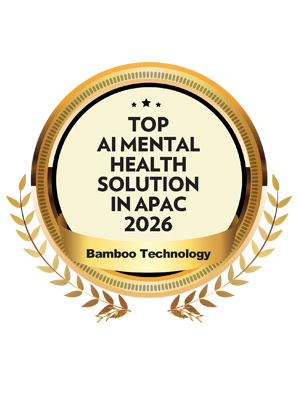
According to WHO and Deloitte Global Mental Health research, proactive intervention models can deliver an ROI of 5.3 compared to 3.8 for reactive care, reflecting reduced productivity loss and improved retention outcomes. This shift underpins its recognition as Startup City APAC’s Top AI Mental Health Solution 2026.
Voice-Driven AI in Mental Health: A New Standard for Early Intervention
Mental healthcare systems continue to struggle with a structural imbalance between demand and accessible support. Enterprises face rising productivity losses linked to disengagement, burnout and untreated psychological strain, while traditional care models remain episodic and difficult to scale. Text-based digital tools and survey-driven assessments have attempted to bridge this gap, yet they often fail to capture early emotional signals or sustain meaningful engagement. The result is a persistent lag between emerging risk and timely intervention, leaving leadership teams with limited visibility into workforce wellbeing until issues escalate.
A more effective approach is emerging around continuous, behavior-based insight rather than periodic self-reporting. Systems that can interpret emotional signals in real time, without relying on user articulation, address a fundamental limitation of conventional tools. Voice as an input medium introduces a deeper layer of psychological context, capturing nuances that text cannot convey. This enables earlier identification of stress patterns and emotional deterioration before they surface in performance metrics or clinical symptoms.
Equally important is the ability to embed support into daily routines without introducing friction. Adoption often falters when employees must navigate formal processes, request approvals or disclose personal information. Solutions that preserve anonymity while offering immediate access tend to achieve higher engagement, particularly in regions where stigma suppresses participation in formal programs. Sustained usage depends not on novelty but on whether the system helps individuals build internal coping mechanisms that persist beyond active interaction.
Continuity of care also separates effective platforms from superficial interventions. Traditional therapy models, constrained by time and cost, provide limited touchpoints. In contrast, systems that offer consistent monitoring and guidance create a longitudinal understanding of emotional states, allowing patterns to be tracked and addressed before they intensify. This continuity supports both individual resilience and organizational oversight, enabling leadership to respond to trends rather than isolated incidents.
Bamboo Technology, Ltd exemplifies this shift through its HereHear system, which centers on voice-driven emotional analysis as the primary mode of interaction. By interpreting vocal patterns rather than relying on text or surveys, it captures multi-dimensional emotional signals that function as early indicators of psychological strain. This approach allows it to detect risks that might otherwise remain unreported, offering a more accurate foundation for intervention.
Its deployment model emphasizes privacy and accessibility, using de-identified structures that remove barriers to entry while maintaining organizational visibility at an aggregate level. This balance supports higher participation without compromising individual confidentiality. Continuous availability further strengthens engagement, allowing users to access support without scheduling constraints or administrative involvement.
The system’s design extends beyond immediate assistance, incorporating behavioral frameworks that guide users toward lasting cognitive change. Evidence of sustained improvement after disengagement suggests that it fosters durable resilience rather than temporary reliance. At an organizational level, aggregated emotional insights provide leadership with a forward-looking view of workforce wellbeing, enabling preventive action instead of reactive response. Its ability to flag early warning signals and connect individuals to appropriate care pathways reinforces its role as a complementary layer to traditional therapy.
For organizations evaluating advanced mental health solutions, Bamboo Technology, Ltd presents a compelling model grounded in early detection, continuous engagement and measurable behavioral impact.
...Read more
AI Mental Health Solutions in APAC Info
Q1
What Should Organizations Understand About AI Mental Health Solutions in APAC?
AI Mental Health Solutions in APAC are changing how organizations approach employee wellbeing by moving beyond occasional surveys and reactive support. The most effective platforms help employees check in before stress turns into missed work, difficulty concentrating or a higher risk of burnout and turnover. Their value lies in identifying early warning signs, offering private and convenient access to support, and creating clear pathways to human care when needed. Across APAC, the bigger challenge is making sure support reaches people early enough and in a way they genuinely feel comfortable using.
Q2
How Does Bamboo Technology Apply Voice-Based Mental Health Support?
Many mental health tools rely on written responses, but text often misses the emotion, pace and stress that come through in someone’s voice. Bamboo Technology built HereHear around voice-first interactions, using guided conversations and CBT-informed prompts to help users recognize and reshape unhelpful thought patterns. Founder and CEO Lynia Huang developed this approach through more than a decade of counseling experience and her own journey with severe clinical depression. Its AI Mental Health Solutions in APAC also use de-identified employee IDs, allowing employees to seek support privately without having to contact HR or schedule an appointment.
Q3
What Makes Voice Analysis Useful for Emotional Risk Detection?
People do not always have the words to explain how they are feeling, but their voice can reveal changes that text alone may overlook. AI Mental Health Solutions in APAC that analyze tone, rhythm and vocal stress can identify patterns of ongoing strain sooner than periodic questionnaires or annual wellbeing surveys. These tools should serve as an additional layer of support rather than a replacement for clinicians, especially when higher-risk situations require professional follow-up. Early detection matters because changes in focus, sleep patterns or attendance often appear well before someone feels ready to ask for help.
Q4
Why Do Privacy and Engagement Matter in Workplace Mental Wellness?
Many employees avoid formal support because talking about mental health can feel uncomfortable, risky or culturally sensitive. AI Mental Health Solutions in APAC need to make access simple, protect privacy and use language that feels approachable during a busy workday. Anonymous or de-identified access can encourage greater participation, while aggregated reporting helps leaders understand broader wellbeing trends without exposing personal conversations. Striking that balance is especially important in workplaces where stigma may keep employees silent until challenges begin to affect performance, engagement or retention.
Q5
How Should Buyers Evaluate AI-Driven Mental Health Platforms?
A polished demonstration is only the starting point. Buyers should evaluate AI Mental Health Solutions in APAC using real-life scenarios, such as an employee seeking support late at night, a manager reviewing team wellbeing trends or a flagged risk that requires human intervention. A meaningful assessment should include multilingual capabilities, local relevance, escalation processes, data privacy practices and how well the platform fits within existing wellbeing programs instead of becoming another unused portal.
Q6
What Distinguishes Bamboo Technology’s Model for Global Workforces?
Bamboo Technology combines always-available AI support with human intervention when clinical care is needed. HereHear supports English and Mandarin, with localization for Japanese and Southeast Asian markets, and its subscription model is available at a fraction of the cost of traditional session-based care. The company has also been selected for Berkeley SkyDeck’s Industry Partnership Program Batch 19. For global employers evaluating AI Mental Health Solutions in APAC, this combination of voice analysis, CBT-based guidance, multilingual access and workforce-level insights offers a practical way to support employees across different cultures, time zones and working environments.